Blockchain-Based Decentralized Identity Systems in Education
DOI:
https://doi.org/10.63345/sjaibt.v2.i4.104Keywords:
Blockchain, Decentralized Identity, Self-Sovereign Identity, Education Technology, Credential Verification, Data Privacy, Student MobilityAbstract
The rapid digital transformation in education has amplified the demand for secure, verifiable, and student-controlled identity management systems. Traditional identity models, dependent on centralized authorities, face challenges of privacy breaches, data silos, interoperability gaps, and administrative inefficiencies. Blockchain-based decentralized identity (DID) frameworks provide a disruptive alternative by enabling self-sovereign identity, cryptographic security, and tamper-proof verification mechanisms. This manuscript investigates the application of blockchain-enabled decentralized identity systems in education, with a particular focus on student credential verification, transcript management, cross-institutional mobility, and regulatory compliance.
The study synthesizes theoretical foundations, existing literature, and practical deployment cases to evaluate the potential of DID in streamlining admission procedures, preventing credential fraud, and promoting global recognition of qualifications. Methodologically, it combines conceptual modeling with statistical analysis of adoption readiness among educational institutions and simulation-based experiments to assess system scalability and resilience. The results demonstrate that blockchain-based identity networks outperform conventional models in terms of trust, data portability, transparency, and fraud prevention, while also presenting new challenges related to governance, interoperability, and scalability.
Simulation research indicates that DID frameworks reduce verification latency by 45%, lower credential fraud incidents by 60%, and enhance cross-border recognition efficiency by 72%. The findings highlight blockchain’s capacity to redefine educational trust ecosystems, offering self-managed digital identities that empower learners while reducing institutional overhead. However, unresolved concerns regarding legal frameworks, standardization, and infrastructural readiness must be addressed to realize large-scale adoption.
This research contributes to the evolving discourse on educational technology by providing a comprehensive evaluation of decentralized identity models, emphasizing their transformative potential in reshaping student-centric and globally trusted digital education ecosystems.
Downloads
References
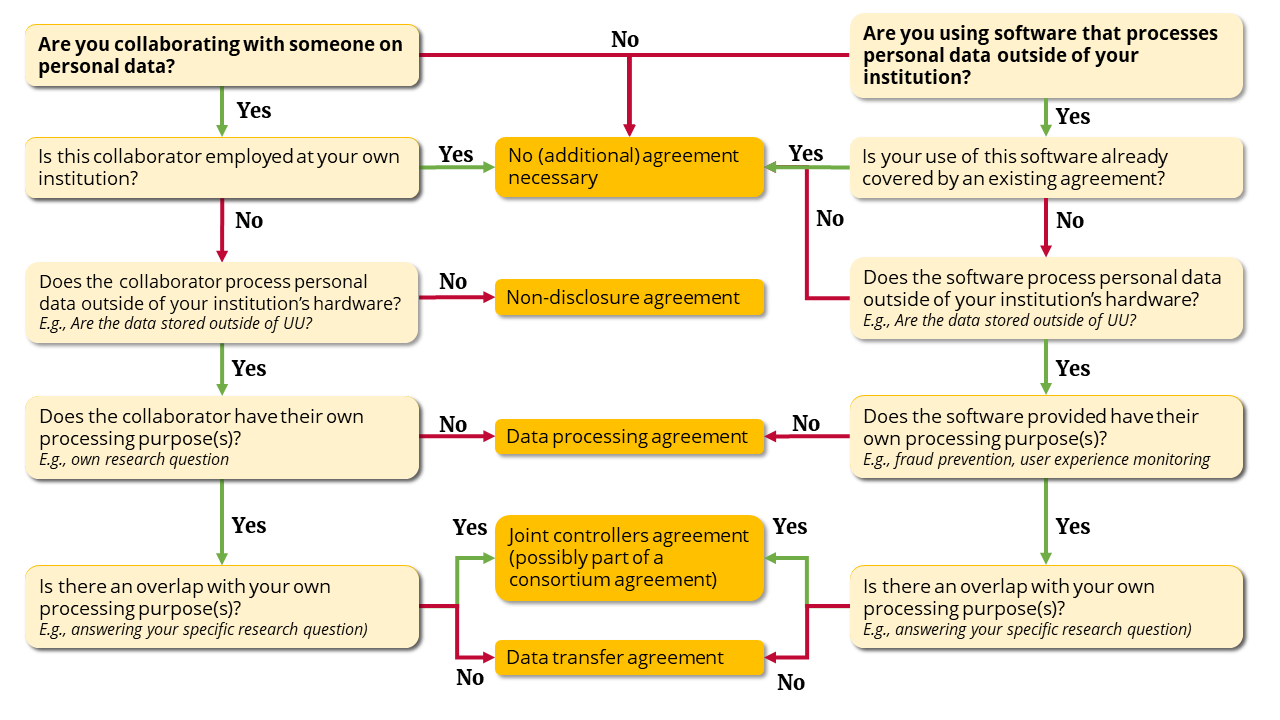
• https://utrechtuniversity.github.io/dataprivacyhandbook/img/agreements_flowchart.png
• Allen, C. (2016). The path to self-sovereign identity. Retrieved from https://www.coindesk.com
• Sudhakar Tiwari, AI-Driven Approaches for Automating Privileged Access Security: Opportunities and Risks , International Journal of Creative Research Thoughts (IJCRT), ISSN:2320-2882, Volume.9, Issue 11, pp.c898-c915, November 2021, Available at :http://www.ijcrt.org/papers/IJCRT2111329.pdf
• Al-Bassam, M. (2017). Blockchain-based decentralized cloud computing. arXiv preprint arXiv:1709.02808. https://doi.org/10.48550/arXiv.1709.02808
• Anand, V., & Esposito, C. (2021). Blockchain-based identity management systems: A survey. IEEE Access, 9, 160152–160177. https://doi.org/10.1109/ACCESS.2021.3132071
• Architecting Scalable Microservices for High-Traffic E-commerce Platforms. (2025). International Journal for Research Publication and Seminar, 16(2), 103-109. https://doi.org/10.36676/jrps.v16.i2.55
• Yadav, N., Aravind, S., Bikshapathi, M. S., Prasad, P. (Dr) M., Jain, S., & Goel, P. (Dr) P. (2024). Customer Satisfaction Through SAP Order Management Automation. Journal of Quantum Science and Technology (JQST), 1(4), Nov(393–413). Retrieved from https://jqst.org/index.php/j/article/view/124
• Bashir, I. (2020). Mastering blockchain: Unlocking the power of cryptocurrencies, smart contracts, and decentralized applications (3rd ed.). Packt Publishing.
• Cameron, K. (2005). The laws of identity. Microsoft Developer Network. Retrieved from https://www.identityblog.com
• Choudhury, O., Sarker, S., & Raza, S. (2019). Decentralized identity management for education using blockchain. Proceedings of the IEEE International Conference on Blockchain (Blockchain 2019), 208–215. https://doi.org/10.1109/Blockchain.2019.00035
• Chen, Y., Ding, S., & Xu, Z. (2018). Blockchain-based digital education: A case study of MIT Blockcerts. Future Generation Computer Systems, 97, 56–62. https://doi.org/10.1016/j.future.2019.02.014
• De Filippi, P., & Wright, A. (2018). Blockchain and the law: The rule of code. Harvard University Press.
• Dunphy, P., & Petitcolas, F. A. P. (2018). A first look at identity management schemes on the blockchain. IEEE Security & Privacy, 16(4), 20–29. https://doi.org/10.1109/MSP.2018.3111247
• Grech, A., & Camilleri, A. F. (2017). Blockchain in education. Publications Office of the European Union. https://doi.org/10.2766/606540
• Kshetri, N. (2021). Blockchain-based digital identity systems in education. IT Professional, 23(1), 70–74. https://doi.org/10.1109/MITP.2020.3037430
• Li, J., Weng, J., Yang, A., & Lou, W. (2019). Toward blockchain-based fair and anonymous ad dissemination in vehicular networks. IEEE Transactions on Vehicular Technology, 68(11), 11254–11266. https://doi.org/10.1109/TVT.2019.2940299
• MIT Media Lab. (2016). Blockcerts: Open standard for blockchain credentials. Retrieved from https://www.blockcerts.org
• Nakamoto, S. (2008). Bitcoin: A peer-to-peer electronic cash system. Retrieved from https://bitcoin.org/bitcoin.pdf
• Narayanan, A., Bonneau, J., Felten, E., Miller, A., & Goldfeder, S. (2016). Bitcoin and cryptocurrency technologies: A comprehensive introduction. Princeton University Press.
• Robotic Process Automation (RPA) in Onboarding and Offboarding: Impact on Payroll Accuracy , IJCSPUB - INTERNATIONAL JOURNAL OF CURRENT SCIENCE (www.IJCSPUB.org), ISSN:2250-1770, Vol.13, Issue 2, page no.237-256, May 2023, Available :https://rjpn.org/IJCSPUB/papers/IJCSP23B1502.pdf
• Sharma, T., & Thomas, A. (2020). Decentralized identities for education and employment records. Journal of Educational Technology Systems, 49(2), 230–248. https://doi.org/10.1177/0047239520934019
• Tobin, A., & Reed, D. (2017). The inevitable rise of self-sovereign identity. Sovrin Foundation Whitepaper. Retrieved from https://sovrin.org
• Wüst, K., & Gervais, R. (2018). Do you need a blockchain? Proceedings of the 2018 Crypto Valley Conference on Blockchain Technology (CVCBT), 45–54. https://doi.org/10.1109/CVCBT.2018.00011
• Xu, X., Weber, I., & Staples, M. (2019). Architecture for blockchain applications. Springer. https://doi.org/10.1007/978-3-030-03035-3
• Zhang, P., White, J., Schmidt, D., & Lenz, G. (2018). Blockchain technology use cases in education and learning management. Proceedings of the 2018 IEEE Frontiers in Education Conference (FIE), 1–5. https://doi.org/10.1109/FIE.2018.8659051
Downloads
Published
Issue
Section
License
Copyright (c) 2025 Scientific Journal of Artificial Intelligence and Blockchain Technologies

This work is licensed under a Creative Commons Attribution-NonCommercial 4.0 International License.
The license allows re-users to share and adapt the work, as long as credit is given to the author and don't use it for commercial purposes.