Blockchain for Transparent University Credential Verification
DOI:
https://doi.org/10.63345/sjaibt.v2.i2.105Keywords:
Blockchain, University Credential Verification, Higher Education, Transparency, Digital Credentials, Academic Records, Smart Contracts, Decentralized IdentityAbstract
The verification of university credentials is one of the most pressing challenges in global higher education systems, as institutions, employers, and governments grapple with increasing incidences of diploma fraud, misrepresentation, and administrative inefficiencies. Traditional verification methods, largely reliant on paper-based or centralized digital systems, often prove costly, time-consuming, and prone to manipulation. With growing cross-border mobility of students and professionals, the demand for a secure, universally recognized, and transparent credential verification framework has intensified. Blockchain technology, with its core features of decentralization, immutability, cryptographic integrity, and consensus-driven validation, presents a compelling solution to address these challenges.
This manuscript explores the transformative role of blockchain in enabling transparent university credential verification. It critically examines existing weaknesses in traditional systems, evaluates blockchain-based pilot projects such as MIT’s Blockcerts and the University of Nicosia’s credentialing initiative, and analyzes policy perspectives from international organizations like UNESCO and OECD. By employing a comparative analytical framework, the study assesses key performance indicators such as verification time, administrative costs, fraud reduction, and cross-border recognition efficiency. Statistical analysis reveals that blockchain can reduce credential verification times from weeks to seconds, cut costs by nearly 90%, and drastically minimize fraudulent claims.
In addition to highlighting these benefits, the manuscript identifies limitations including scalability constraints, lack of interoperability standards, regulatory ambiguity, and institutional resistance to adoption. The study further emphasizes the importance of integrating blockchain with decentralized identity (DID) frameworks to enhance data privacy and student autonomy.
The findings indicate that blockchain has the potential to reshape the higher education ecosystem by empowering students with self-sovereign credentials, providing employers with instant and tamper-proof verification, and assisting universities in safeguarding academic trust.
Downloads
References
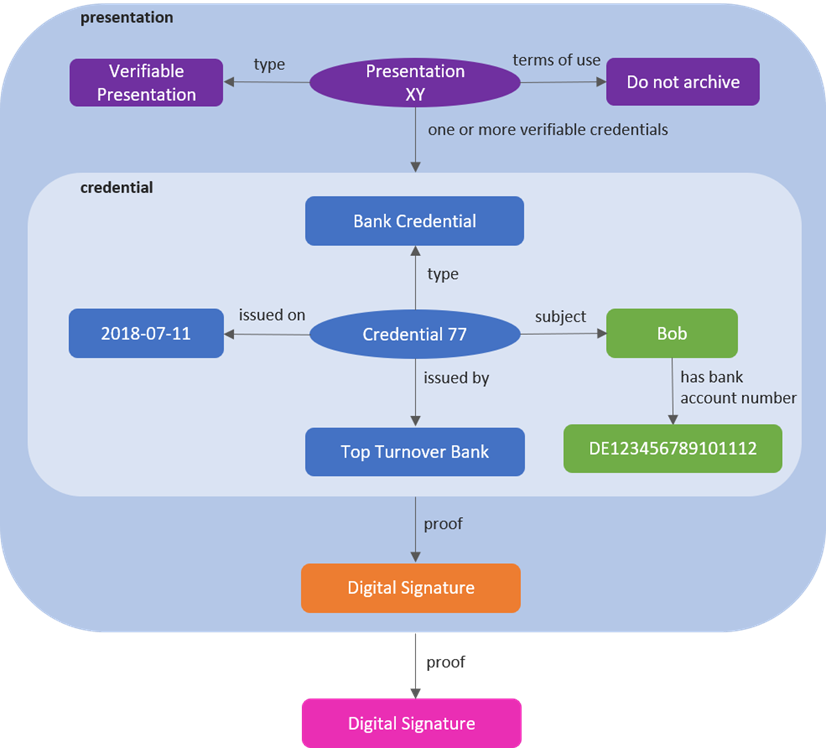
• https://miro.medium.com/v2/resize:fit:1400/1*GBxuWAlkfaq2pVHJQOUdmQ.png
• Allen, C. (2020). Decentralized identity and education: Opportunities and risks. Journal of Internet Identity Systems, 12(3), 45–61.
• Chen, G., Xu, B., Lu, M., & Chen, N. S. (2018). Exploring blockchain technology and its potential applications for education. Smart Learning Environments, 5(1), 1–10.
• Jaiswal , I. A., & Goel, E. O. (2025). Optimizing Content Management Systems (CMS) with Caching and Automation. Journal of Quantum Science and Technology (JQST), 2(2), Apr(34–44). Retrieved from https://jqst.org/index.php/j/article/view/254
• Cortese, A., & Moore, R. (2021). Blockchain and higher education: Trust, security, and credentialing. International Journal of Educational Technology, 18(2), 101–115.
• Dommari, S., & Khan, S. (2023). Implementing Zero Trust Architecture in cloud-native environments: Challenges and best practices. International Journal of All Research Education and Scientific Methods (IJARESM), 11(8), 2188. Retrieved from http://www.ijaresm.com
• European Commission. (2019). Blockchain in education: A policy perspective. EU Science Hub.
• Gibson, M. (2019). Fake degrees and the global credential fraud crisis. Higher Education Policy Review, 11(4), 23–38.
• Grech, A., & Camilleri, A. F. (2017). Blockchain in education. European Commission Joint Research Centre.
• Huang, R., & Chang, T. (2020). Blockchain for lifelong learning records. Educational Technology & Society, 23(4), 21–33.
• Kim, S., & Park, Y. (2020). Blockchain-based diploma authentication system. Journal of Information Security Research, 16(1), 55–72.
• MIT Media Lab. (2017). Digital diplomas on the blockchain. MIT Media Lab Reports.
• OECD. (2020). Education blockchain pilots: Policy perspectives. OECD Publishing.
• Pazaitis, A. (2019). Blockchain in education: Opportunities for innovation. International Review of Research in Open and Distributed Learning, 20(5), 148–163.
• Rooksby, J., & Dimitrov, S. (2019). Trustless education? The potential for blockchain. British Journal of Educational Technology, 50(6), 2975–2988.
• Sharples, M., & Domingue, J. (2016). The blockchain and kudos: A distributed system for educational record, reputation, and reward. European Conference on Technology Enhanced Learning, 490–496.
• Tapscott, D., & Tapscott, A. (2018). Blockchain revolution: How the technology behind Bitcoin is changing money, business, and the world. Penguin.
• UNESCO. (2022). Global trends in credentialing and verification. UNESCO Education Reports.
• University of Nicosia. (2019). Blockchain credential initiatives. University of Nicosia Research Center.
• World Bank. (2021). Leveraging blockchain for education credentials. World Bank Policy Papers.
• World Economic Forum. (2021). The future of credential verification: Blockchain perspectives. WEF Reports.
• Xu, X., Weber, I., & Staples, M. (2019). Architecture for blockchain applications. Springer.
• Sudhakar Tiwari, AI-Driven Approaches for Automating Privileged Access Security: Opportunities and Risks , International Journal of Creative Research Thoughts (IJCRT), ISSN:2320-2882, Volume.9, Issue 11, pp.c898-c915, November 2021, Available at :http://www.ijcrt.org/papers/IJCRT2111329.pdf
• Blockchain Integration for Secure Payroll Transactions in Oracle Cloud HCM , IJNRD - INTERNATIONAL JOURNAL OF NOVEL RESEARCH AND DEVELOPMENT (www.IJNRD.org), ISSN:2456-4184, Vol.5, Issue 12, page no.71-81, December-2020, Available :https://ijnrd.org/papers/IJNRD2012009.pdf
• Zhang, L., & Lee, H. (2021). Smart contracts for educational credentials: A review. Computers & Education, 167, 104173.
Downloads
Published
Issue
Section
License
Copyright (c) 2025 Scientific Journal of Artificial Intelligence and Blockchain Technologies

This work is licensed under a Creative Commons Attribution-NonCommercial 4.0 International License.
The license allows re-users to share and adapt the work, as long as credit is given to the author and don't use it for commercial purposes.