Decentralized Autonomous Organizations (DAOs) in Governance
DOI:
https://doi.org/10.63345/sjaibt.v2.i2.201Keywords:
Decentralized Autonomous Organizations, blockchain governance, smart contracts, digital democracy, decentralized decision-making, DAO regulation, participatory governanceAbstract
Decentralized Autonomous Organizations (DAOs) have emerged as one of the most disruptive innovations in governance, offering new frameworks for collective decision-making, transparency, and accountability in both public and private spheres. Rooted in blockchain technology and powered by smart contracts, DAOs eliminate the need for traditional hierarchical management by enabling rules to be self-enforced and decisions to be executed automatically. This paper examines DAOs as governance mechanisms, tracing their historical development, theoretical underpinnings, and practical implementations across finance, civic engagement, digital cooperatives, and resource management. Through an extensive literature review, comparative case studies, and thematic content analysis, the study highlights DAOs’ potential to reduce agency problems, enhance participatory governance, and ensure auditability through immutable ledgers.
However, the analysis also reveals significant challenges, including legal ambiguity, technological vulnerabilities, token-weighted plutocracy, voter apathy, and scalability concerns that hinder their broader application. Results suggest that DAOs function effectively as experimental laboratories of algorithmic governance but are not yet fully equipped to replace traditional governance structures. Instead, hybrid models integrating decentralized decision-making with institutional oversight present the most viable path forward. By critically analyzing DAO case studies such as MakerDAO, ConstitutionDAO, and CityDAO, the study underscores their dual role as governance innovations and socio-political experiments that push the boundaries of trust, coordination, and autonomy in the digital age. The findings position DAOs not only as technological entities but also as frameworks capable of reshaping democratic practices, resource governance, and institutional legitimacy in the 21st century.
Downloads
References
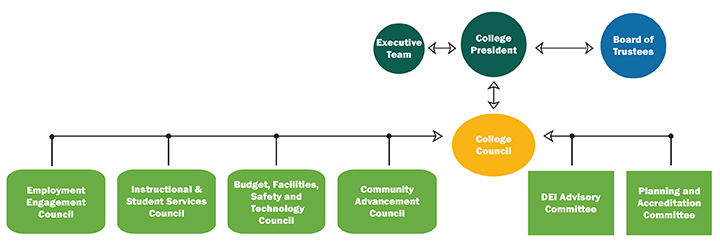
• https://www.shoreline.edu/about-shoreline/images/pg%20Flow%20Chart.jpg
• Buterin, V. (2014). A next-generation smart contract and decentralized application platform. Ethereum White Paper. https://ethereum.org/en/whitepaper/
• Wright, A., & De Filippi, P. (2015). Decentralized blockchain technology and the rise of lex cryptographia. SSRN Electronic Journal. https://doi.org/10.2139/ssrn.2580664 DOI: https://doi.org/10.2139/ssrn.2580664
• Hassan, S., & De Filippi, P. (2021). Decentralized autonomous organizations. Internet Policy Review, 10(2), 1–12. https://doi.org/10.14763/2021.2.1556 DOI: https://doi.org/10.14763/2021.2.1556
• Beck, R., Müller-Bloch, C., & King, J. L. (2018). Governance in the blockchain economy: A framework and research agenda. Journal of the Association for Information Systems, 19(10), 1020–1034. DOI: https://doi.org/10.17705/1jais.00518
• DuPont, Q. (2017). Experiments in algorithmic governance: A history and ethnography of “The DAO,” a failed decentralized autonomous organization. In M. Campbell-Verduyn (Ed.), Bitcoin and beyond (pp. 157–177). Routledge. DOI: https://doi.org/10.4324/9781315211909-8
• Xu, J., Chen, Y., & Kou, G. (2019). The rise of decentralized autonomous organizations (DAOs): Fundamentals, perspectives, and new directions. Computers in Human Behavior, 102, 1–9. https://doi.org/10.1016/j.chb.2019.07.018 DOI: https://doi.org/10.1016/j.chb.2019.07.018
• Schläpfer, M., & Seidel, M. (2021). Decentralized governance and blockchain: Potentials for sustainable futures. Sustainability, 13(15), 8245. https://doi.org/10.3390/su13158245 DOI: https://doi.org/10.3390/su13158245
• Ostrom, E. (1990). Governing the commons: The evolution of institutions for collective action. Cambridge University Press. DOI: https://doi.org/10.1017/CBO9780511807763
• Jensen, M. C., & Meckling, W. H. (1976). Theory of the firm: Managerial behavior, agency costs, and ownership structure. Journal of Financial Economics, 3(4), 305–360. DOI: https://doi.org/10.1016/0304-405X(76)90026-X
• Morshed, A., Khezr, S., & Yassine, A. (2022). A systematic review of DAOs: Challenges and opportunities. IEEE Access, 10, 90234–90256. https://doi.org/10.1109/ACCESS.2022.3198765
• Nabben, K. (2021). The DAO strikes back: Evaluating algorithmic governance in decentralized organizations. Blockchain Research Institute Report.
• MakerDAO. (2020). The Maker protocol: MakerDAO’s system of decentralized governance. https://makerdao.com
• Aragon Association. (2021). Aragon governance framework. https://aragon.org
• CityDAO. (2022). Experimenting with blockchain-based city governance. https://citydao.io
• ConstitutionDAO. (2021). ConstitutionDAO: A collective bid for the U.S. Constitution. https://constitutiondao.com
• PleasrDAO. (2021). Community-owned digital art collective. https://pleasrdao.com
• De Filippi, P., & Wright, A. (2018). Blockchain and the law: The rule of code. Harvard University Press. DOI: https://doi.org/10.4159/9780674985933
• Shadab, H. B. (2021). Token-based governance: Opportunities and risks. Fordham Journal of Corporate & Financial Law, 26(2), 341–374.
• Allen, D. W., & Berg, C. (2020). The DAO controversy: Lessons for blockchain governance. Journal of Institutional Economics, 16(6), 805–825. https://doi.org/10.1017/S1744137420000033
• Wyoming Legislature. (2021). Wyoming DAO LLC legislation (SF0038). https://wyoleg.gov
Downloads
Published
Issue
Section
License
Copyright (c) 2025 Scientific Journal of Artificial Intelligence and Blockchain Technologies

This work is licensed under a Creative Commons Attribution-NonCommercial 4.0 International License.
The license allows re-users to share and adapt the work, as long as credit is given to the author and don't use it for commercial purposes.