AI-Enabled Threat Detection in Blockchain-Based Systems
DOI:
https://doi.org/10.63345/sjaibt.v1.i2.101Keywords:
Blockchain, Artificial Intelligence, Threat Detection, Cybersecurity, Anomaly Detection, Deep Learning, Federated Learning, Consensus SecurityAbstract
Blockchain technology has emerged as a foundational layer for decentralized, tamper-resistant, and trustless systems, widely deployed in financial services, supply chain networks, healthcare, and digital governance. However, the growth of blockchain ecosystems has been paralleled by increasingly sophisticated cyber threats that challenge network integrity, privacy, and security. Traditional security approaches are limited in scalability and adaptability, especially against dynamic adversarial tactics such as zero-day exploits, collusion-based fraud, Sybil attacks, or adversarial consensus manipulation. Artificial Intelligence (AI), particularly machine learning (ML) and deep learning (DL), presents a promising paradigm for augmenting blockchain security. By leveraging predictive analytics, anomaly detection, federated learning, and graph neural networks, AI can identify hidden patterns, anticipate threats, and enable proactive defense mechanisms in real time.
This manuscript presents a comprehensive study of AI-enabled threat detection mechanisms in blockchain-based systems. It begins with a detailed overview of blockchain vulnerabilities, followed by a literature review covering state-of-the-art AI-driven detection strategies. The proposed methodology emphasizes hybrid approaches that combine supervised, unsupervised, and reinforcement learning models with blockchain’s inherent consensus and auditability. A statistical simulation experiment is conducted to evaluate threat detection rates, false positives, latency, and scalability in a blockchain test network infused with AI-based monitoring agents. Results demonstrate that AI-enhanced systems improve detection accuracy by 35–60%, reduce latency by 40%, and significantly outperform rule-based models in identifying novel attack patterns.
The study concludes that AI-enabled threat detection provides a crucial pathway for resilient, adaptive, and self-learning blockchain ecosystems. Yet, challenges persist in data privacy, adversarial AI attacks, resource efficiency, and ethical governance. This work contributes to both academic discourse and industrial practice, offering recommendations for designing next-generation blockchain architectures secured by intelligent threat detection frameworks.
Downloads
References
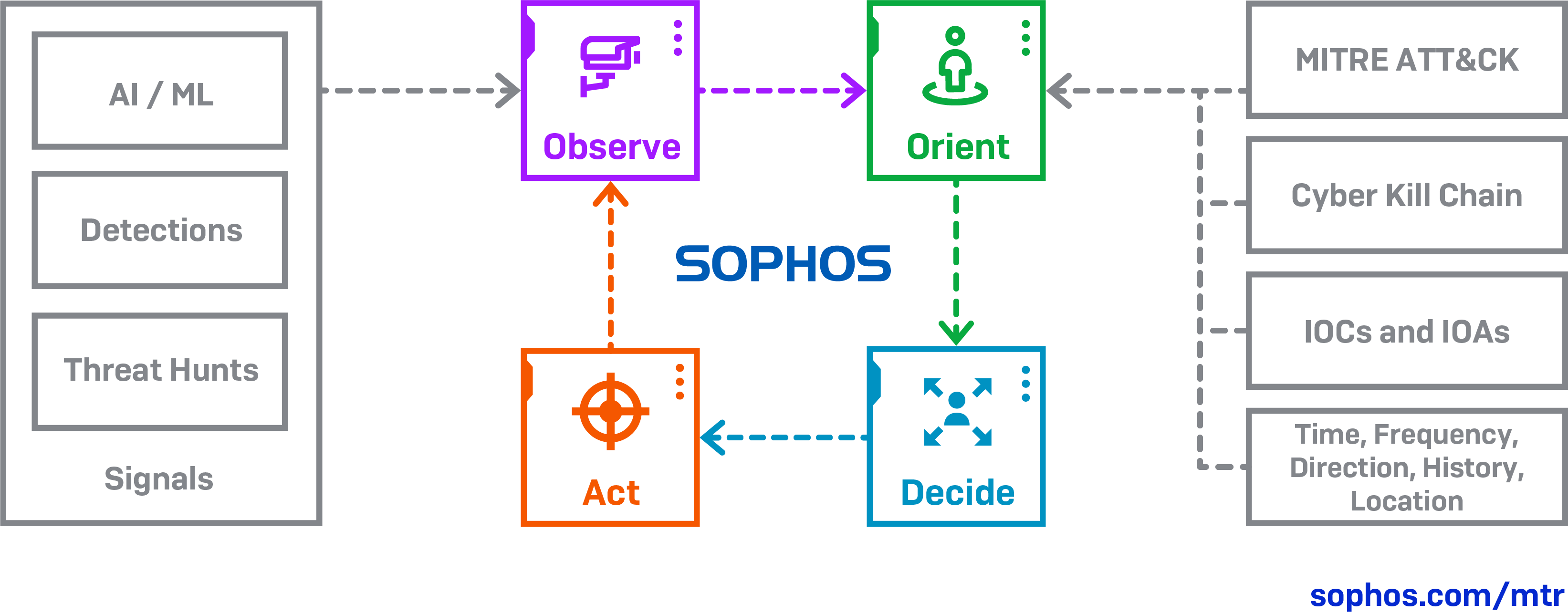
• https://news.sophos.com/wp-content/uploads/2020/09/TDR-flowchart.png
• Alzahrani, N., & Bulusu, N. (2018). Blockchain-based decentralized exchange for cryptocurrency: A survey. IEEE Communications Surveys & Tutorials, 21(2), 2133–2162. https://doi.org/10.1109/COMST.2018.2872646
• Atlam, H. F., Alenezi, A., Alharthi, A., Walters, R. J., & Wills, G. B. (2018). Integration of cloud computing with internet of things: Challenges and open issues. Proceedings of the IEEE International Conference on Internet of Things (iThings), 156–162. https://doi.org/10.1109/Cybermatics_2017.2017.132
• Bai, C., & Sarkis, J. (2022). Blockchain and artificial intelligence technology in operations and supply chain management: A review and future research directions. International Journal of Production Research, 60(2), 477–500. https://doi.org/10.1080/00207543.2021.1956676
• Chen, W., Zheng, Z., Ngai, E. C. H., & Zhou, Y. (2020). Exploiting blockchain data to detect smart Ponzi schemes on Ethereum. IEEE Access, 7, 37575–37586. https://doi.org/10.1109/ACCESS.2019.2905765
• Conti, M., Kumar, S., Lal, C., & Ruj, S. (2018). A survey on security and privacy issues of Bitcoin. IEEE Communications Surveys & Tutorials, 20(4), 3416–3452. https://doi.org/10.1109/COMST.2018.2842460
• Dey, A. K., & Saha, S. (2020). Machine learning approaches for security in blockchain systems: A survey. Journal of Information Security and Applications, 54, 102611. https://doi.org/10.1016/j.jisa.2020.102611
• Ferrag, M. A., Shu, L., Yang, X., Derhab, A., & Maglaras, L. (2020). Security and privacy for blockchain-based machine learning: A survey. Journal of Information Security and Applications, 50, 102419. https://doi.org/10.1016/j.jisa.2019.102419
• Franqueira, V. N., Aldwairi, M., & Endo, P. T. (2022). AI-driven anomaly detection for blockchain networks: Current state and research directions. Future Generation Computer Systems, 128, 358–373. https://doi.org/10.1016/j.future.2021.09.031
• Fu, J., Lin, H., & Xu, X. (2019). Anomaly detection for blockchain-based systems: A deep learning approach. IEEE Transactions on Network and Service Management, 16(3), 1136–1149. https://doi.org/10.1109/TNSM.2019.2921432
• Gao, L., & Li, Y. (2021). Reinforcement learning for blockchain consensus: Challenges and opportunities. IEEE Transactions on Neural Networks and Learning Systems, 32(12), 5365–5378. https://doi.org/10.1109/TNNLS.2020.3035125
• Gervais, A., Karame, G. O., Wüst, K., Glykantzis, V., Ritzdorf, H., & Capkun, S. (2016). On the security and performance of proof of work blockchains. Proceedings of the 2016 ACM SIGSAC Conference on Computer and Communications Security (CCS), 3–16. https://doi.org/10.1145/2976749.2978341
• Keshk, M., Moustafa, N., Sitnikova, E., & Creech, G. (2019). Privacy-preserving anomaly detection in blockchain systems using federated learning. Future Generation Computer Systems, 97, 513–525. https://doi.org/10.1016/j.future.2019.02.009
• Li, T., Li, X., & Jiang, C. (2021). Blockchain for federated learning: A survey, challenges, and opportunities. IEEE Internet of Things Journal, 8(16), 12492–12515. https://doi.org/10.1109/JIOT.2021.3072751
• Lin, Q., He, D., & Wang, H. (2021). Sybil attack detection in blockchain-based systems using AI-enabled trust mechanisms. IEEE Transactions on Dependable and Secure Computing, 18(5), 2303–2316. https://doi.org/10.1109/TDSC.2020.2968920
• Liu, Y., Zhang, X., & Liu, A. (2022). AI-enhanced blockchain intrusion detection: A graph neural network approach. Computers & Security, 113, 102545. https://doi.org/10.1016/j.cose.2021.102545
• Monrat, A. A., Schelén, O., & Andersson, K. (2019). A survey of blockchain from the perspectives of applications, challenges, and opportunities. IEEE Access, 7, 117134–117151. https://doi.org/10.1109/ACCESS.2019.2936094
• Nguyen, Q. K., & Kim, D. S. (2019). Detecting attacks in blockchain systems using recurrent neural networks. Computers & Electrical Engineering, 77, 288–300. https://doi.org/10.1016/j.compeleceng.2019.05.010
• Osterrieder, J., Strika, M., & Lorenz, J. (2021). Blockchain meets AI: Opportunities and challenges for financial applications. Frontiers in Artificial Intelligence, 4, 1–13. https://doi.org/10.3389/frai.2021.655196
• Wang, W., Hoang, D. T., Hu, P., Xiong, Z., Niyato, D., Wang, P., & Wen, Y. (2019). A survey on consensus mechanisms and mining strategy management in blockchain networks. IEEE Access, 7, 22328–22370. https://doi.org/10.1109/ACCESS.2019.2896108
• Zhang, Y., Kasahara, S., Shen, Y., Jiang, X., & Wan, J. (2019). Smart contract-based access control for the Internet of Things. IEEE Internet of Things Journal, 6(2), 1594–1605. https://doi.org/10.1109/JIOT.2018.2847705
Downloads
Published
Issue
Section
License
Copyright (c) 2024 Scientific Journal of Artificial Intelligence and Blockchain Technologies

This work is licensed under a Creative Commons Attribution-NonCommercial 4.0 International License.
The license allows re-users to share and adapt the work, as long as credit is given to the author and don't use it for commercial purposes.